
Robots Page
We have kept yet improved some of the existing Jurassic Park crew of LEGO Mindstorms EV3 robots, which included:
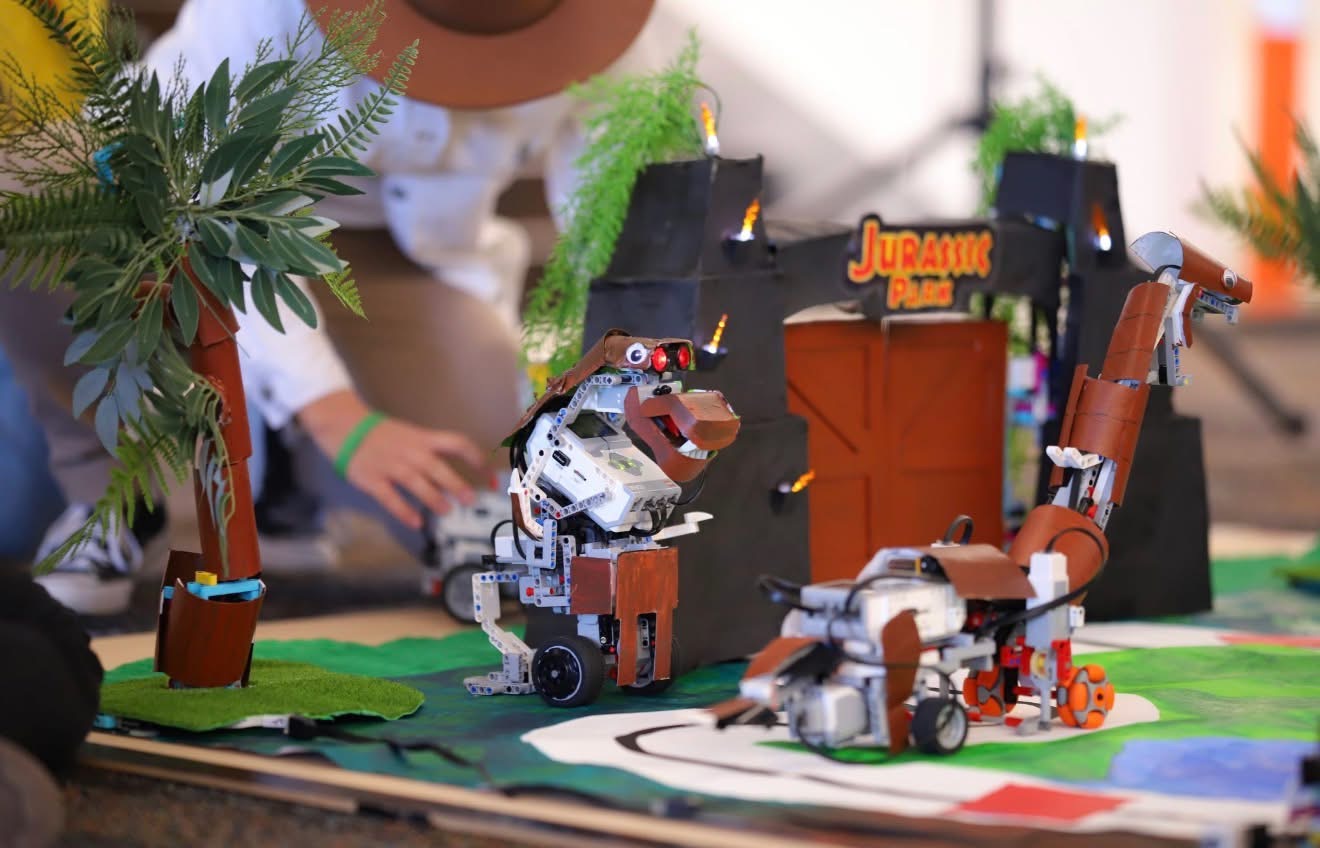
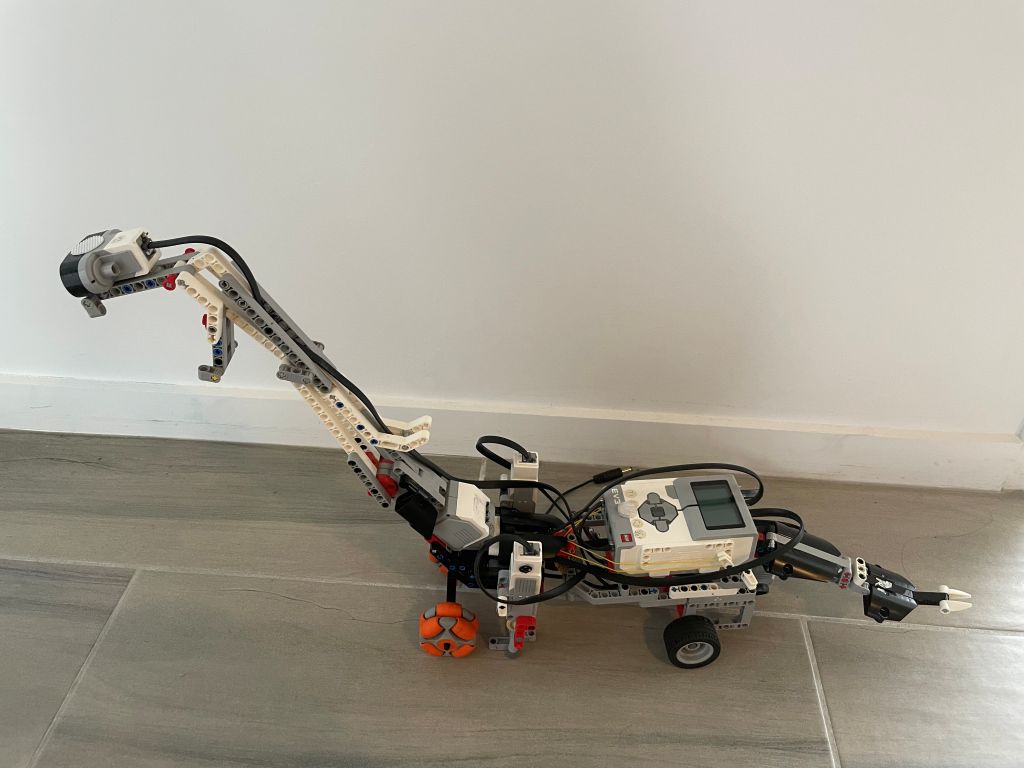
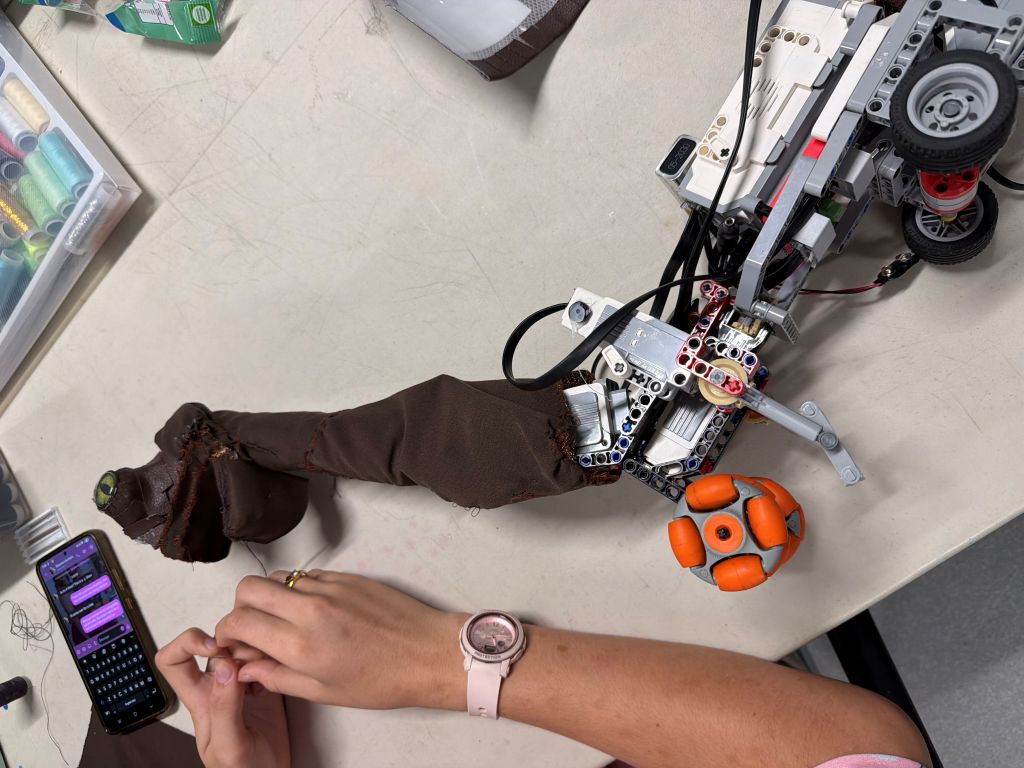
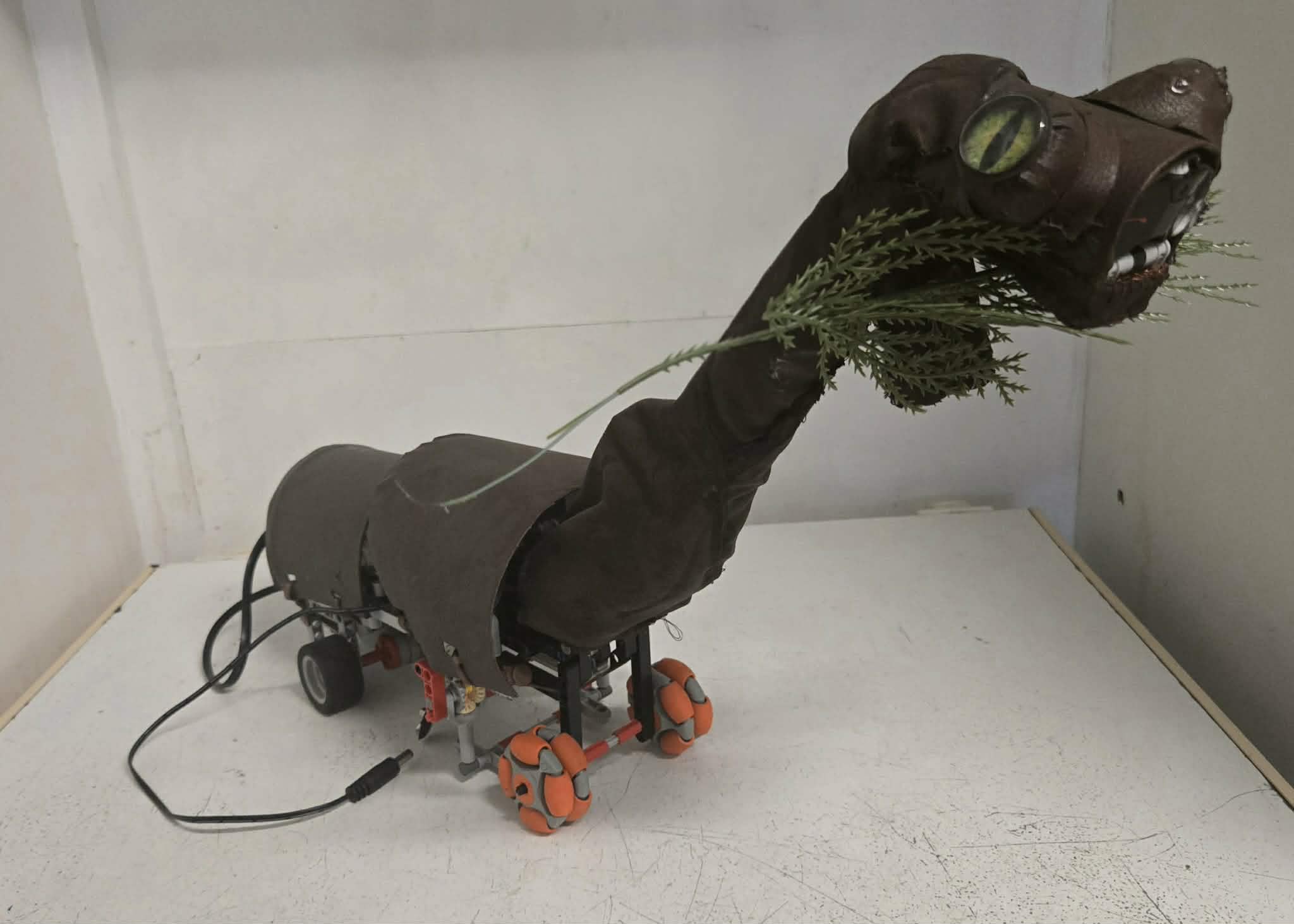
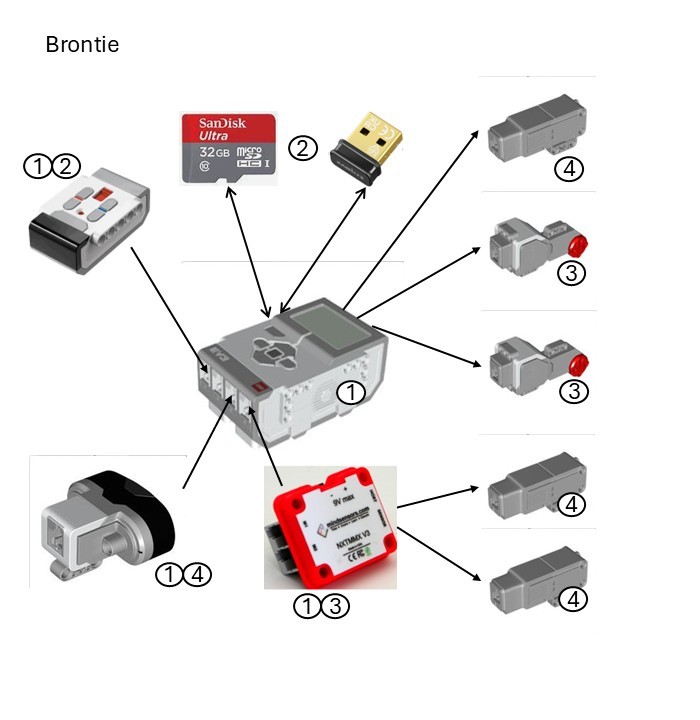
Brontie, the Brachiosaurus
The design of the Brachiosaurus is a 4-wheeled car type based on the LEGO
R3PTAR.
The robot features 2 LEGO Technic actuators driven by 2 small motors. Given it was already using 3 motor ports for moving and opening her mouth, a motor multiplexer was added so the 2 small motors could be used. It is driven by a 9V battery (see glossary for parts referenced in the hardware image).
It has been fully re-costumed and its code improved and ported to a class-based framework. The costume had to be partly changed as well as it was using copper mesh which can create a 'Faraday cage'. This can distort or block wireless communication e.g.: Bluetooth or Wi-Fi and can also cause shorts or damage to the device if the copper mesh comes in contact with any exposed part of the robot or prop.
The EV3Dev Python 3
code sends JavaScript Object Notation (JSON) messages, which are eventually reflected on the
Flask dashboards.
The code also uses the infrared (IR) sensor to locate the IR beacon (to which 'leaves' are attached) and move the robot in that direction. When in reach, it triggers the actuator motor to mimic Brontie standing on her hind legs, and the mouth motor to open and finally close her mouth and 'eat' the leaves one of the tourists is handing her. The actuator motor eventually makes her 'get down' again.
The code does not trigger other robots.
References ...
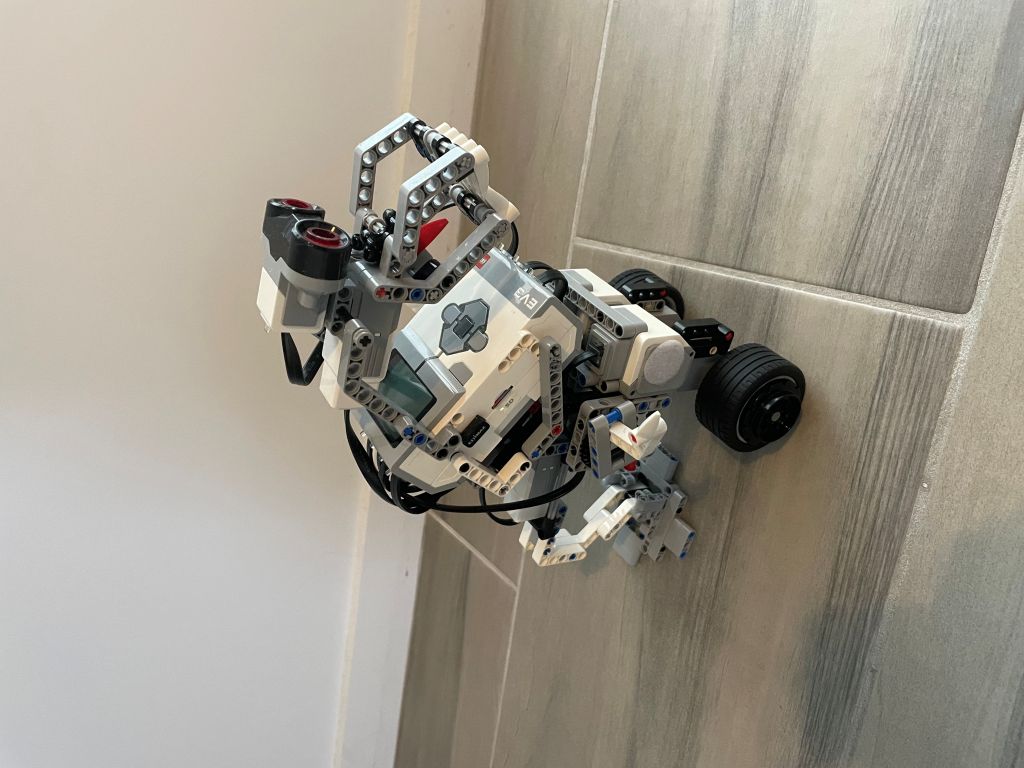
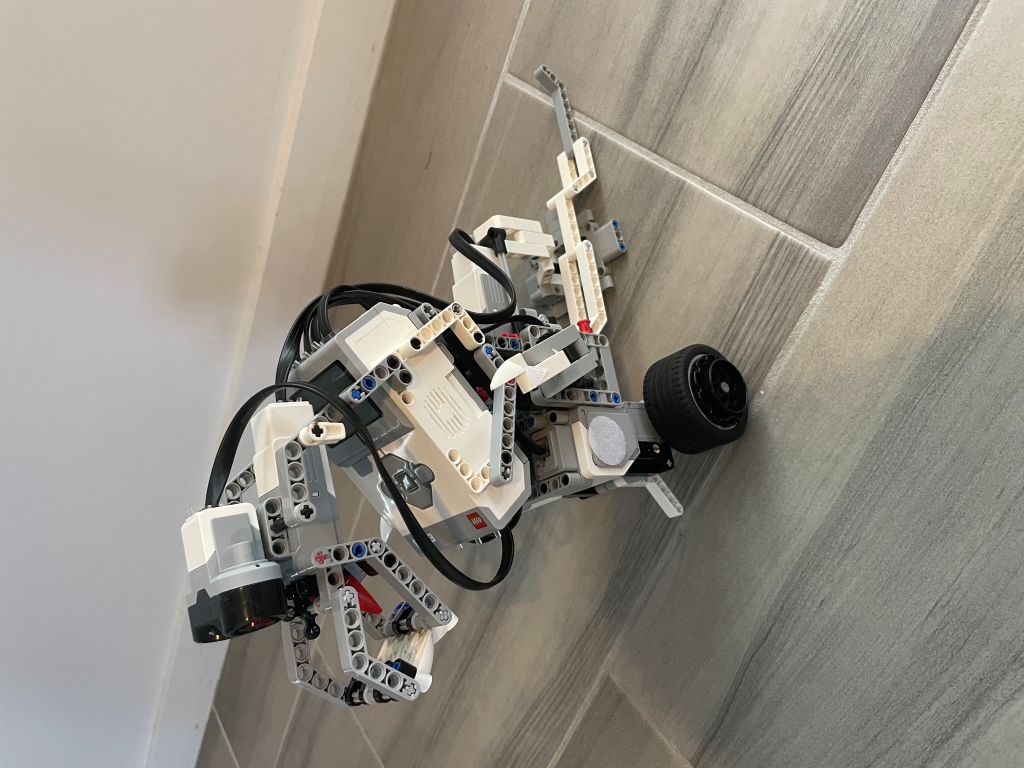
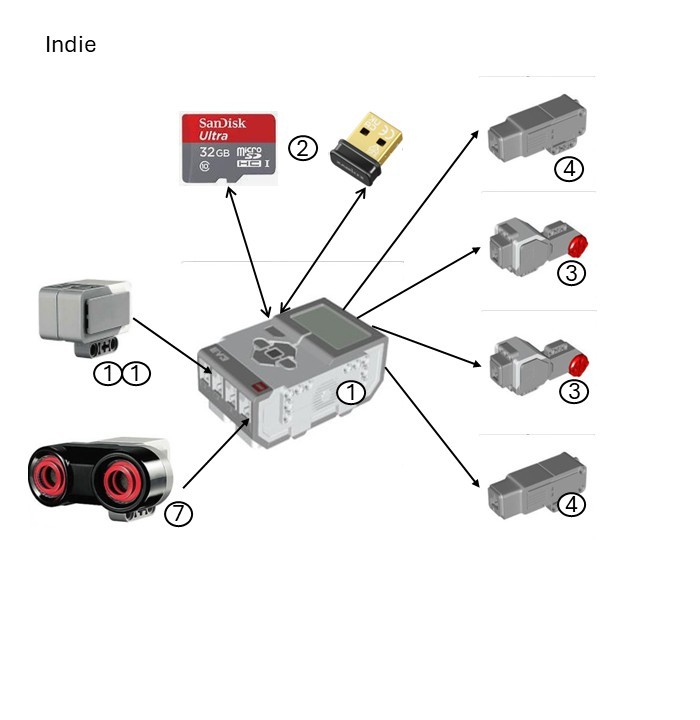
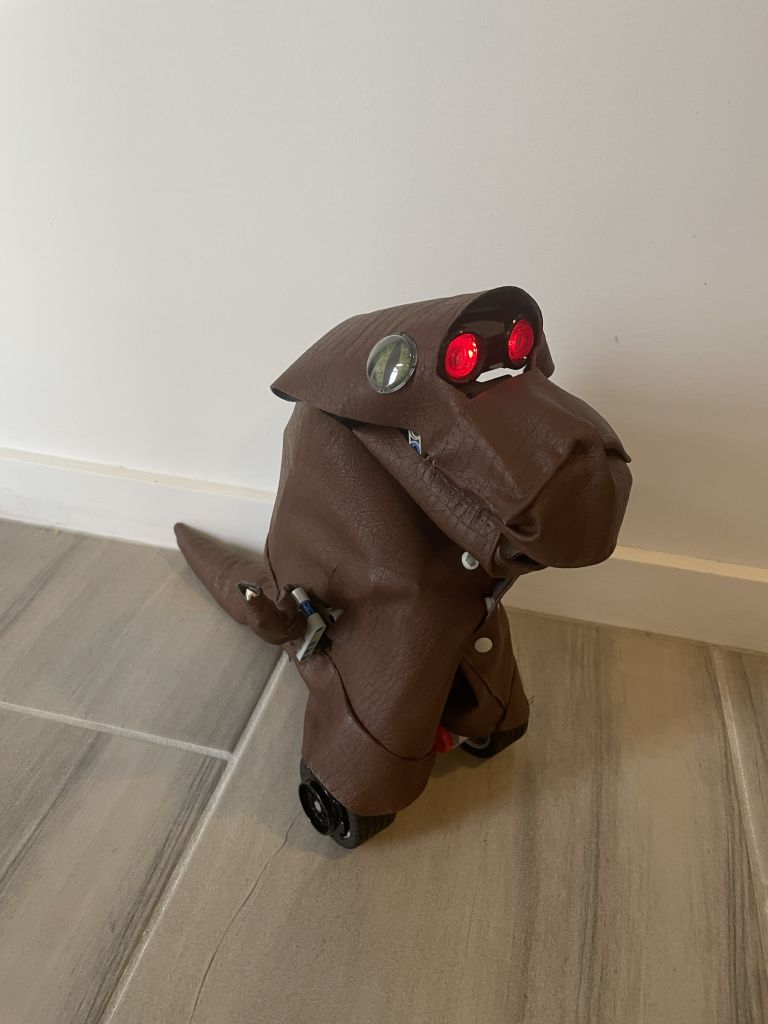
Indie, the Indominus Rex
This used to be Rexie, the T-Rex in the Jurassic Park performance, and is now nicknamed Indie, an Indominus Rex aka an I-Rex.
The design of the robot is a 2-wheeled self-balancing type based on the LEGO
Gyro Boy (see glossary for parts referenced in the hardware image).
It has been fully re-costumed, its design was improved for stability, and its code improved and ported to a class-based framework.
The EV3Dev Python 3
code sends JSON messages, which are eventually reflected on the
Flask dashboards.
The code allows Indie to self-balance. Braces were added in the front and back to avoid her toppling, which would require a team member to put her back up, and cause loss of points.
The arms move in opposite directions through the use of gears. It also uses the ultrasonic sensor to detect and attack other robots. The jaw motor makes her mouth open and close to mimic biting and roaring.
The code does not trigger other robots.
References ...
Jeep, the Jeep (improved)
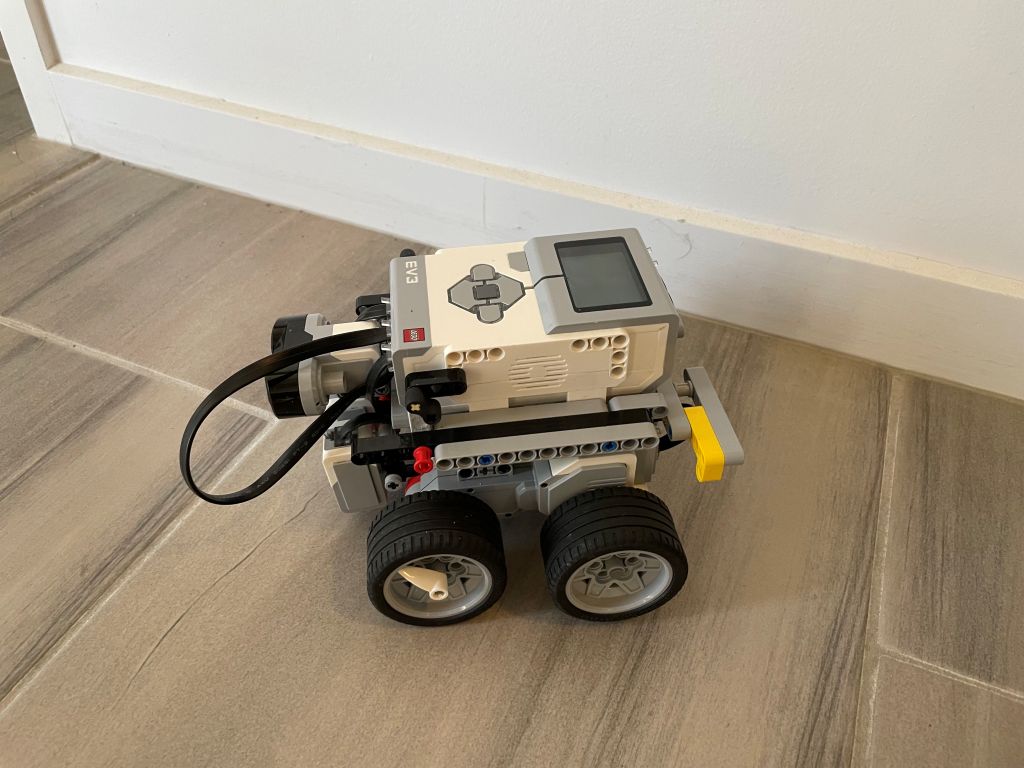
The design of the Jeep is a 4-wheeled car type based on the LEGO
driving base.
The robot is one of the Jurassic Kingdom orchestrators (see
feature 4). It uses a radio frequency identification (RFID) reader for tag scanning (see
feature 1) and an ultrasonic sensor for object avoidance. Safety first!
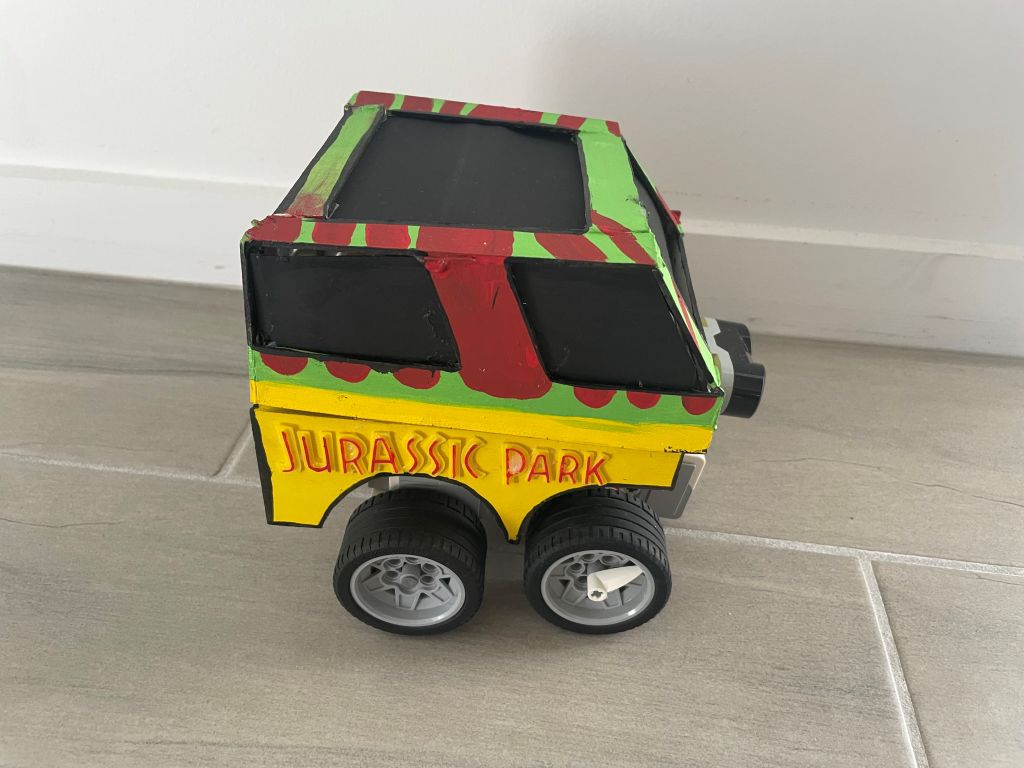
The logo is partly 3D printed and will be sent for recycling at
Infilament
to adhere with our
sustainability commitment.
It has been fully re-costumed and its code amended to cater for the RFID reader, and ported to a class-based framework.
The Pybricks MicroPython
code sends JSON messages, which are eventually reflected on the
Flask dashboards.
The code starts when the scientist presses the "Let's Get this Show on the Road!" button on the Flask status dashboard. The robot then follows the black middle line, like a rescue robot, using 2 colours sensors. It looks for RIFD tags and, when found, triggers other
robots as per JSON data stored in the
orchestration file. It also uses the ultrasonic sensor to detect and avoid other robots and props.
References ...
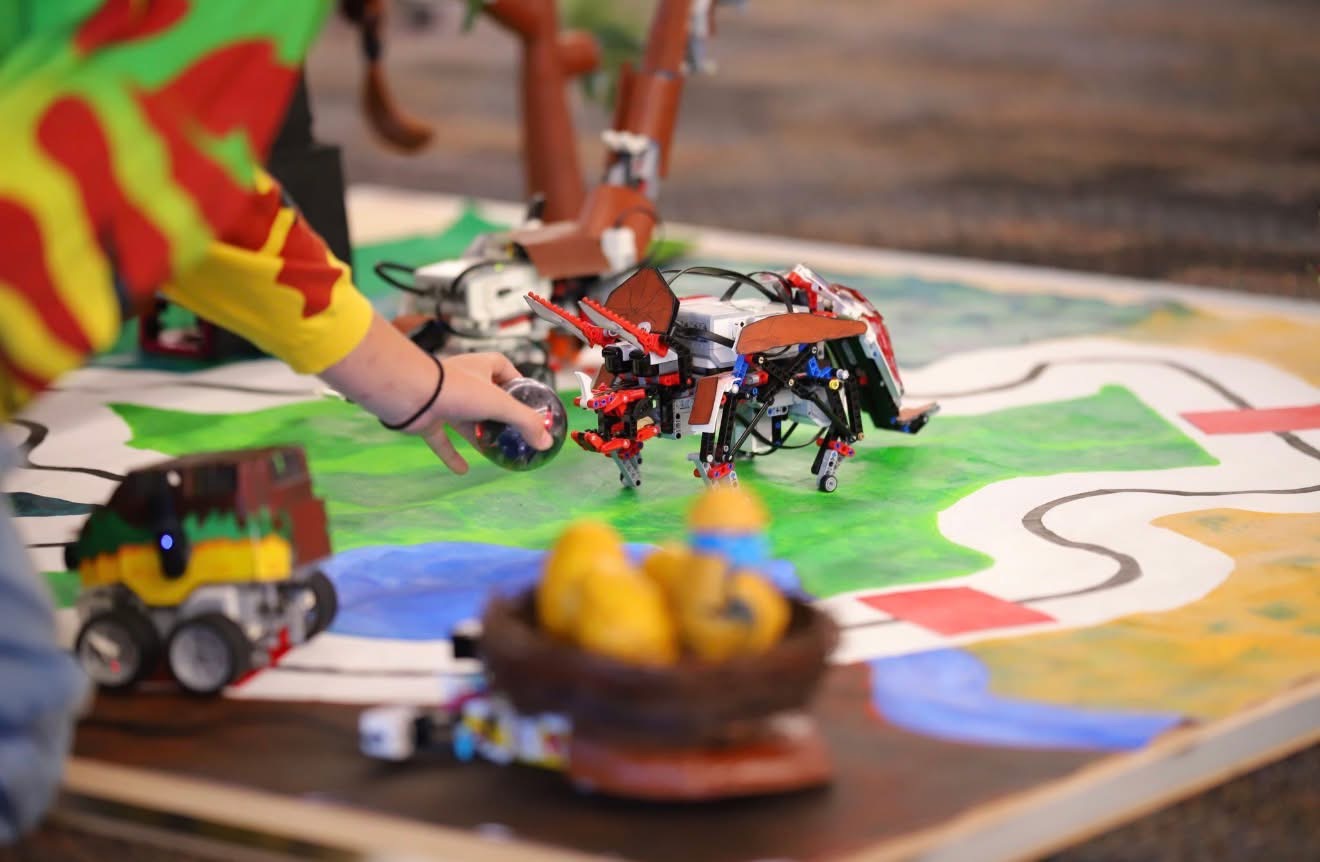
Vale!
Sadly, Trixie left the herd. We will miss you.
For the Jurassic Kingdom performance, we have created new LEGO Mindstorms EV3 and SPIKE Prime robots which are:
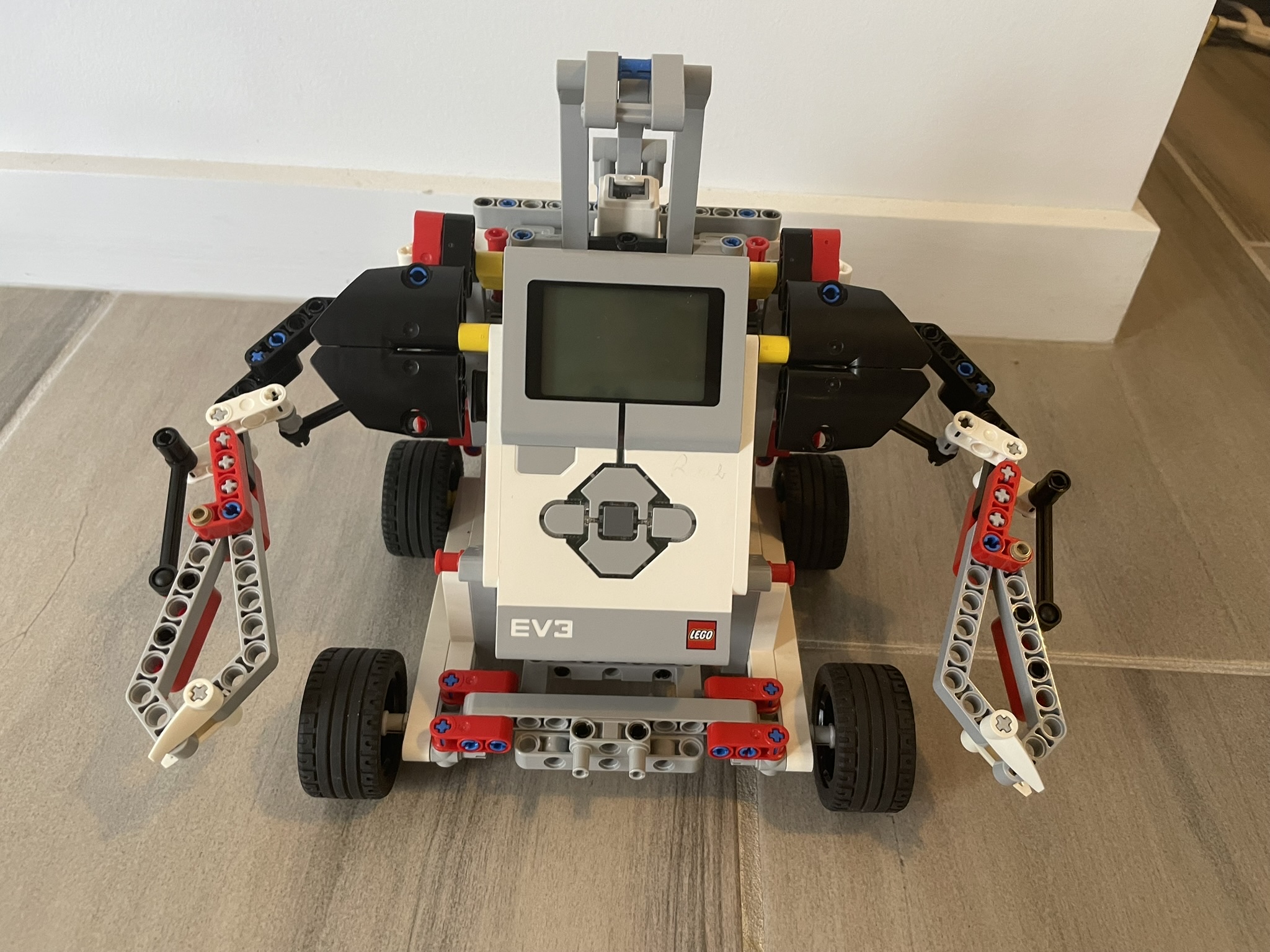
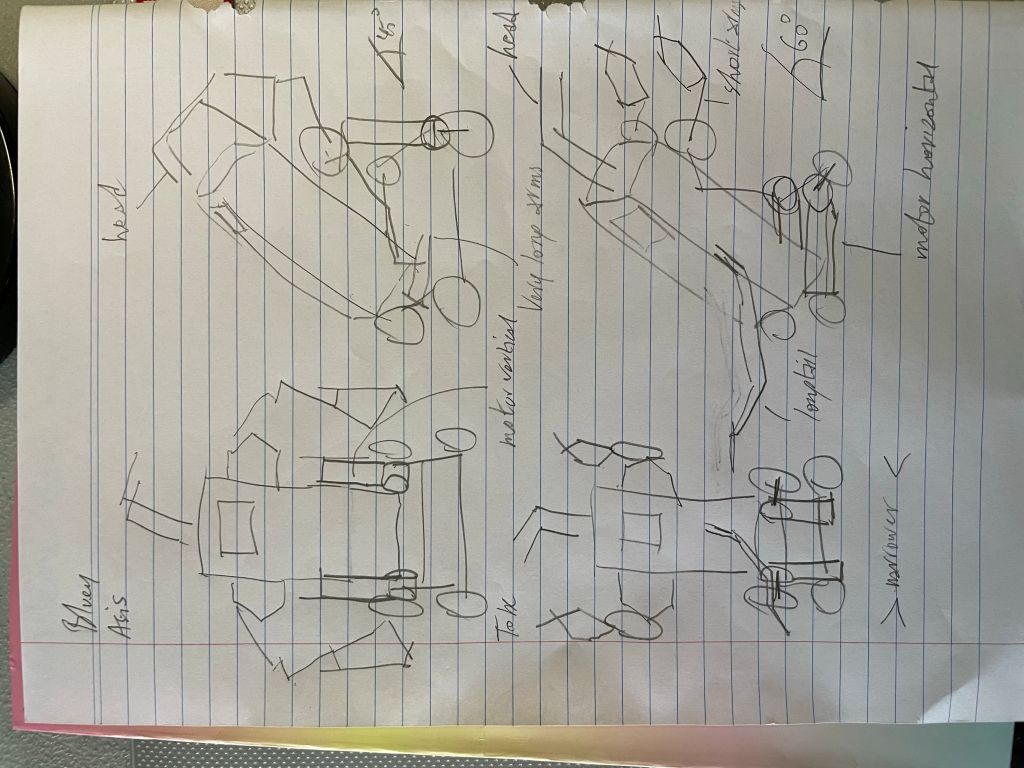
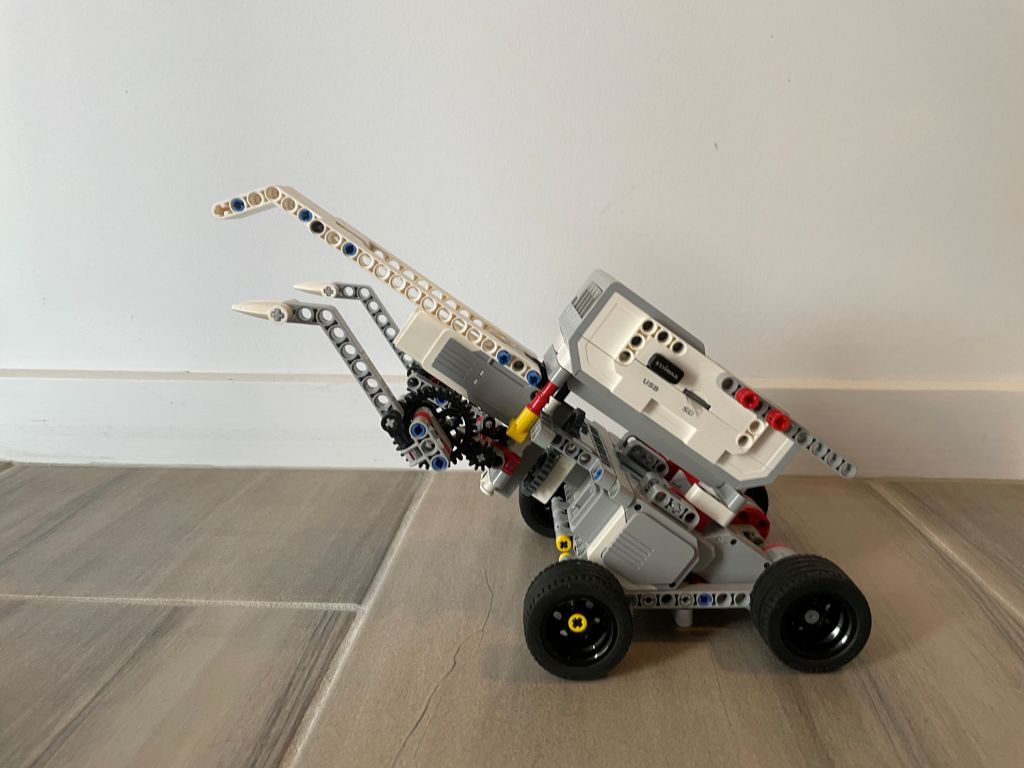
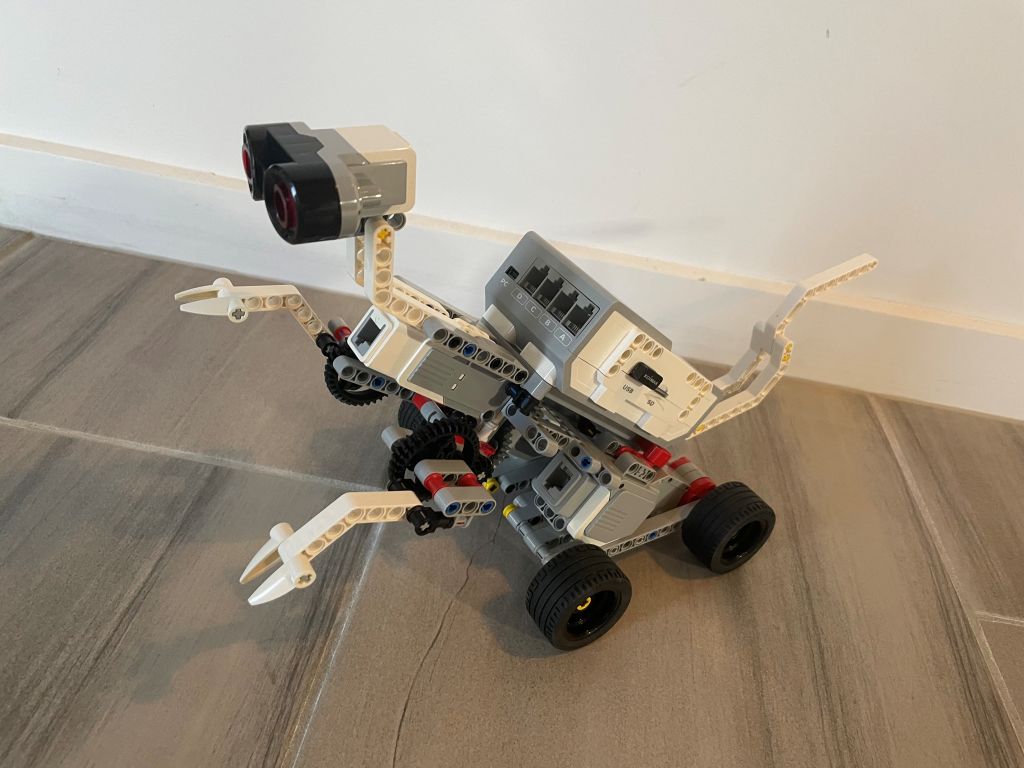

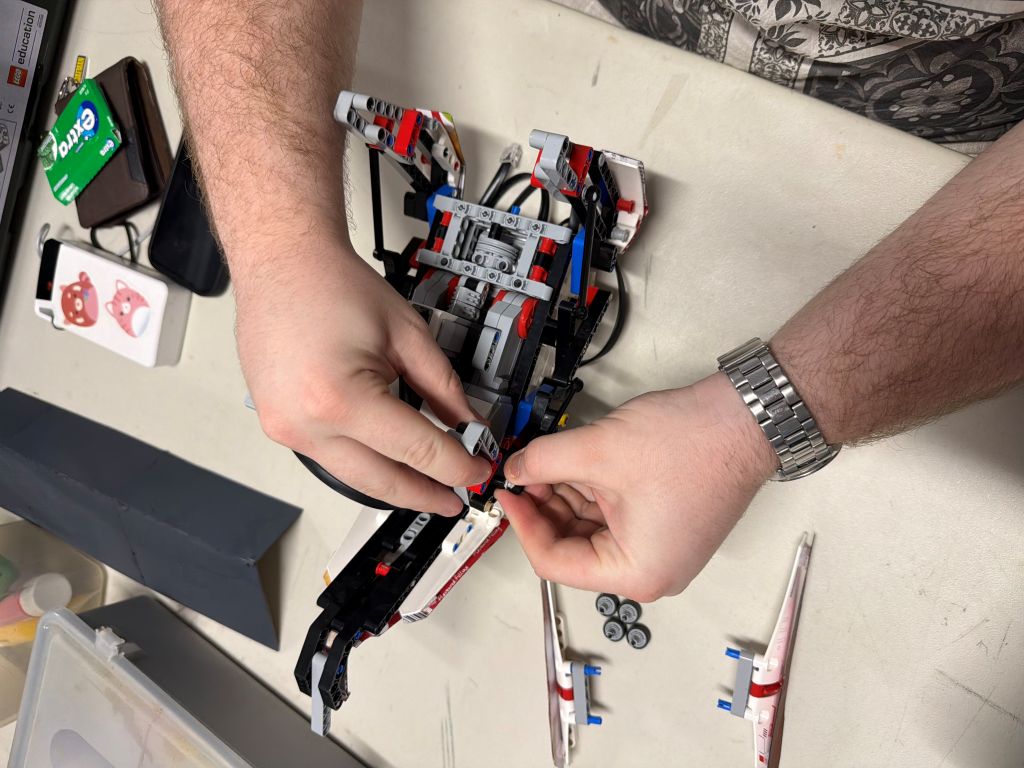
Bluey, the Velociraptor (EV three)
The design of the Raptor is a 4-wheeled car type based on the LEGO
EV3MEG.
The robot uses a video camera (PixyCam V2) for object recognition and following (see
feature 3) and an ultrasonic sensor for object ‘collision’. Even human-bonded?
The EV3Dev Python 3
code sends JSON messages, which are eventually reflected on the
Flask dashboards.
The code allows the Raptor to recognise a ball and follow it around as it is being held by Grady, her mentor. The ball is followed to make her attack the I-Rex. The ultrasonic sensor is used to trigger the arms motor which make her claw the I-Rex when in reach. The arms move in same direction through the use of gears.
The code does not trigger other robots.
References ...
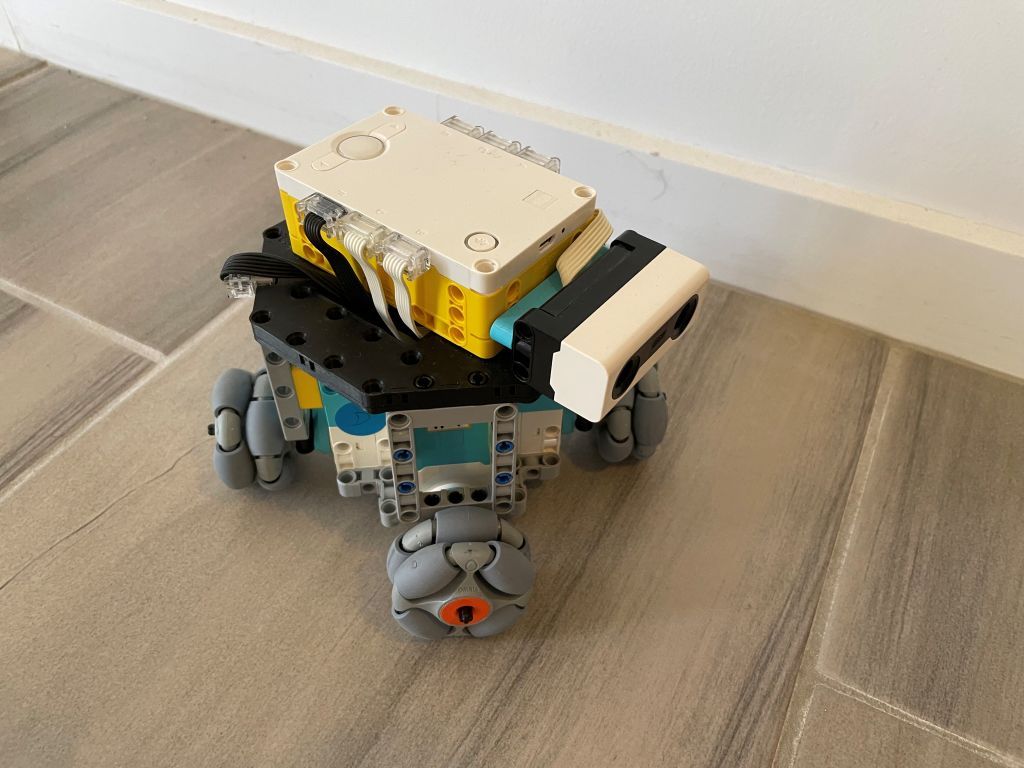
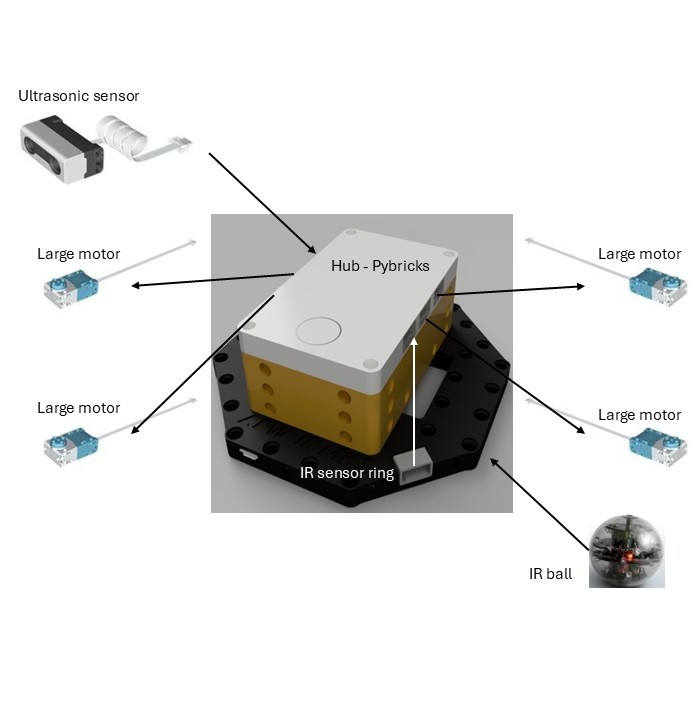
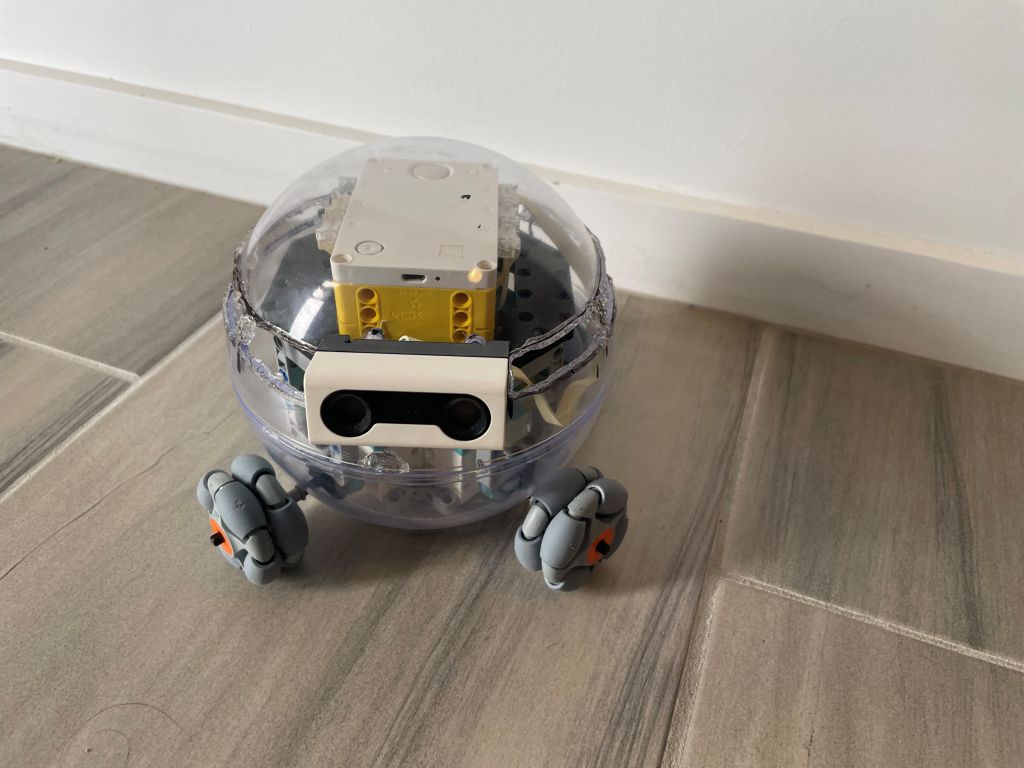
Hamster Ball, the gyrosphere (SPIKE Prime)
The Gyrosphere uses an
IR sensor ring (ABW IR MK1) and
IR ball (EK RCJ-05R) for object following and an ultrasonic sensor for object avoidance. Safety second?
The Pybricks
code sends small Bluetooth messages over Bluetooth Low Energy (BLE) which are converted to JSON messages and eventually reflected on the
Flask dashboards.
The code allows the gyrosphere to follow the IR ball and always face it. This is slightly different from soccer robot behaviour where the robot turns around the ball to face the opposition's goal. The reason for this behaviour is that the robot needs to see obstacles and stop if they are static or continue if they move out the way.
The code does not trigger other robots and props.
References ...
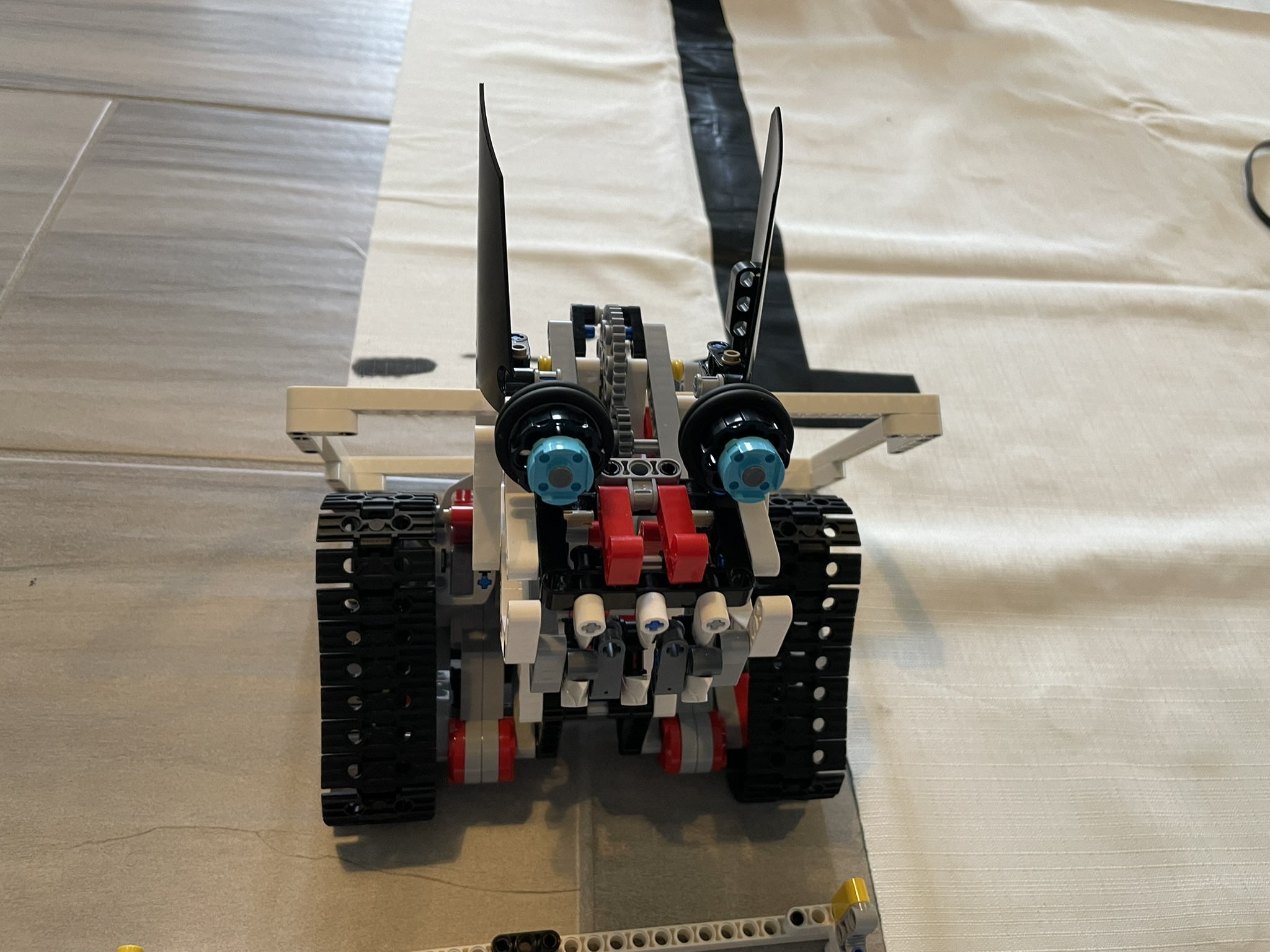
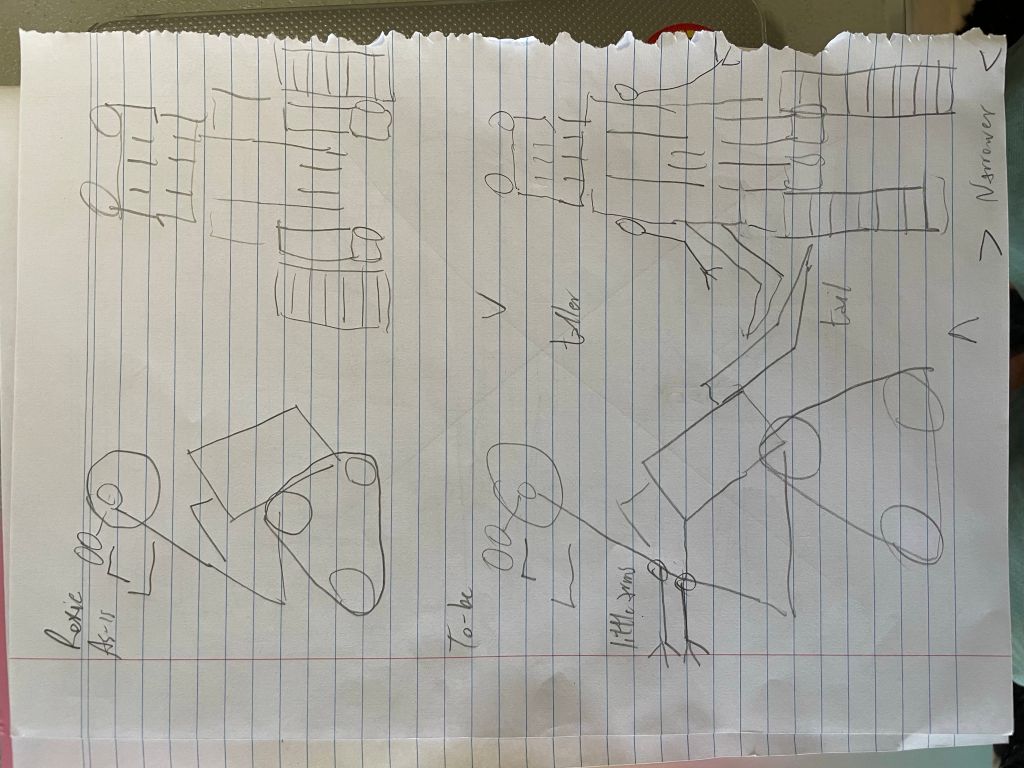
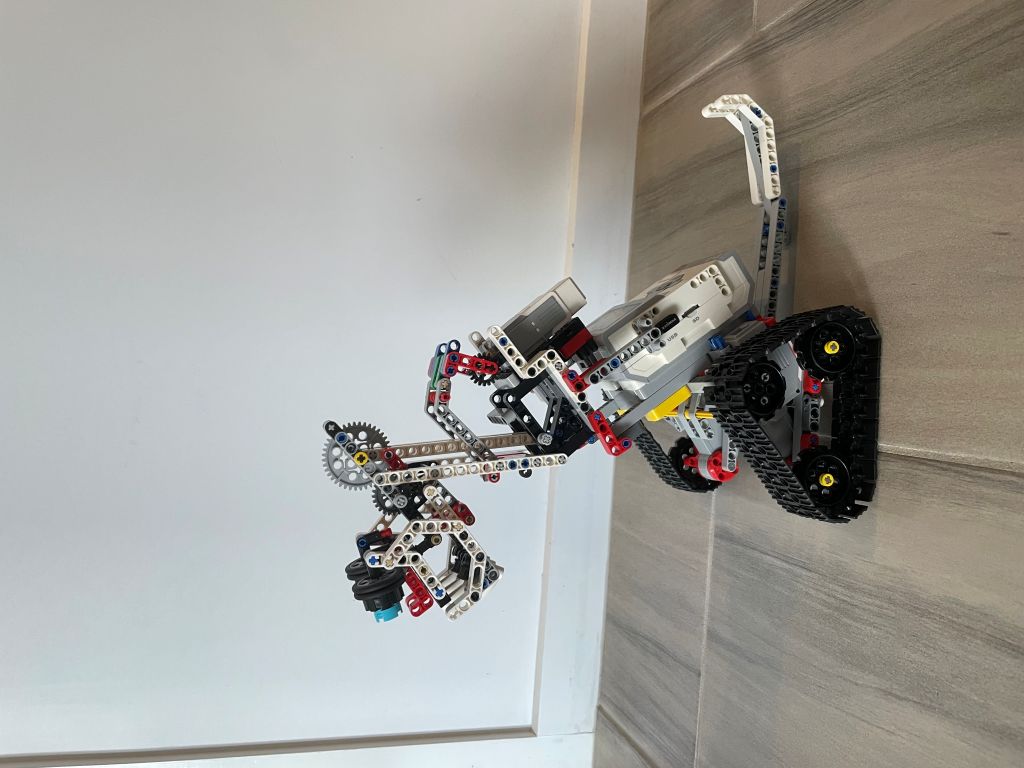
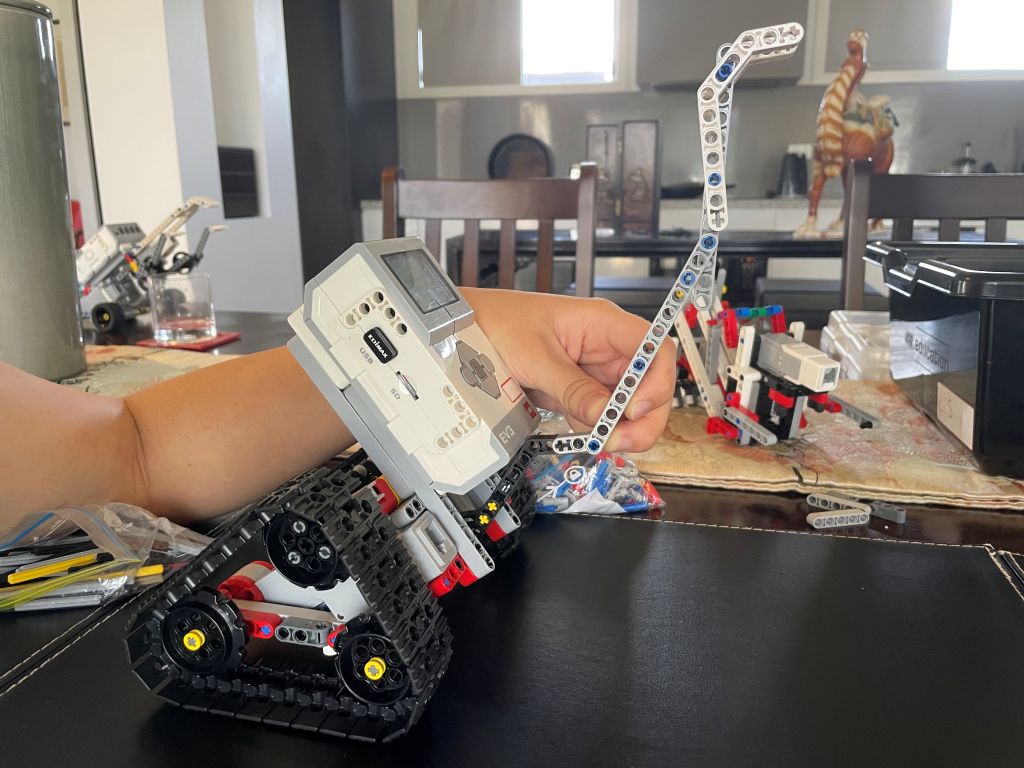
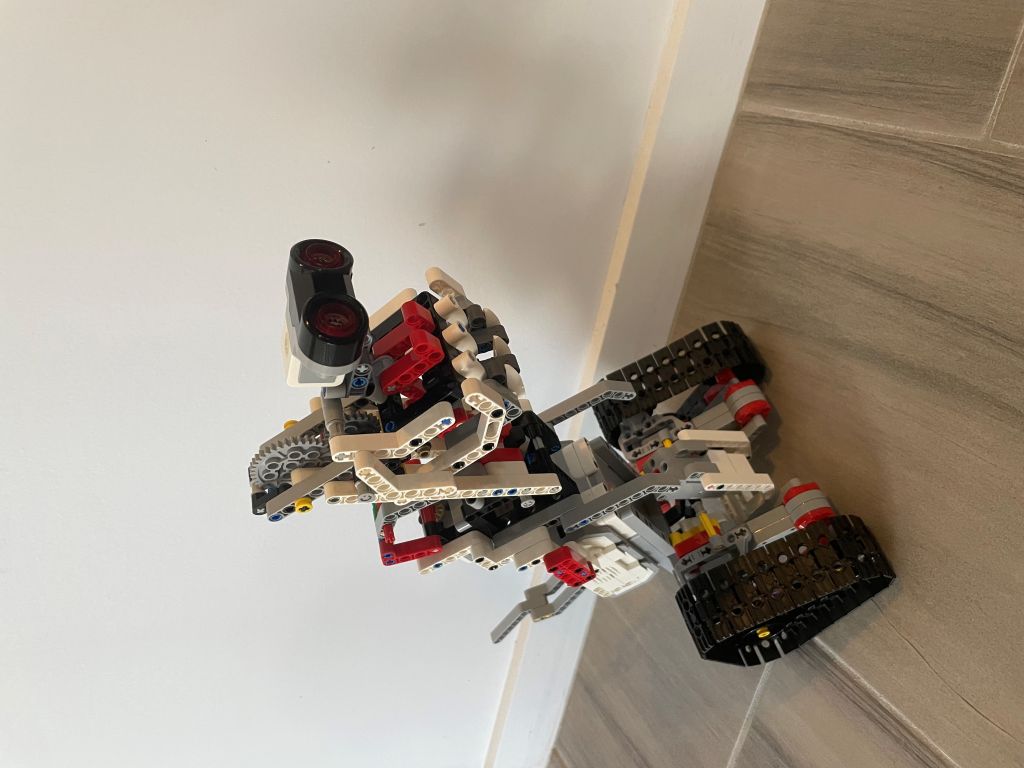
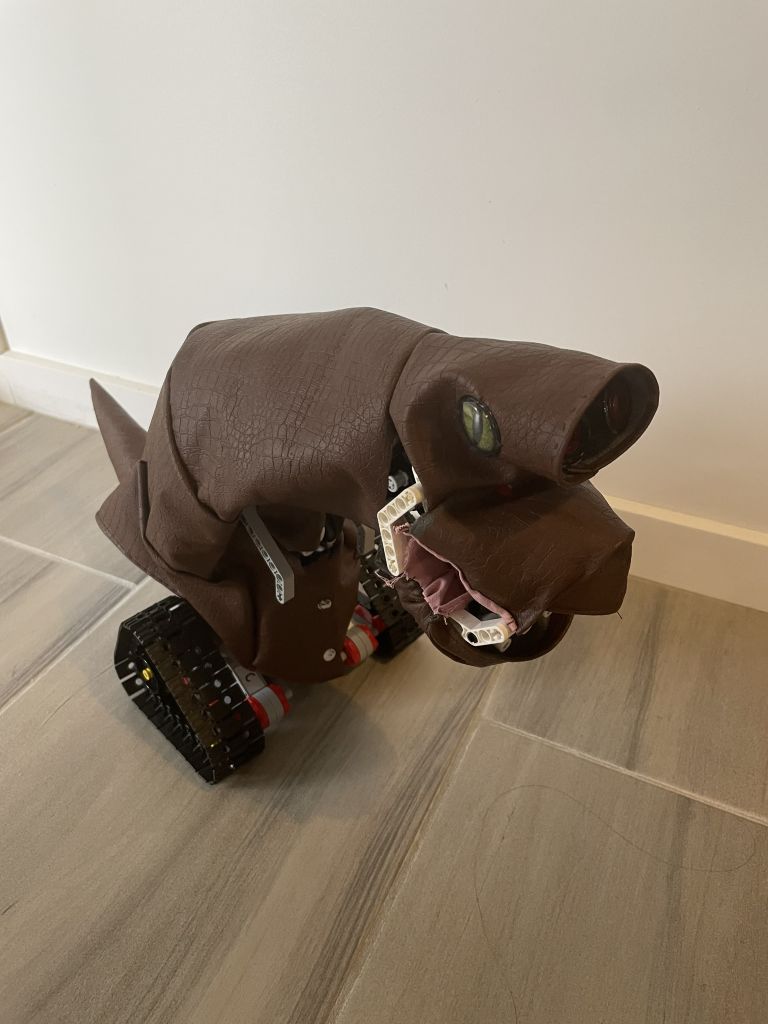
Rexie, the T-Rex (EV three)
This is a new robot nicknamed Rexie, a T-Rex, not to be confused with Indie which used to be Rexie. As if that helps?
The design of the robot is a 2-track tank type based on the LEGO
Znap.
It uses a heat [Infrared (IR) temperature (non-contact)]
sensor for object following (see
feature 2) and an ultrasonic sensor for object ‘collision’. Dinos do not care!
The EV3Dev Python 3
code sends JSON messages, which are eventually reflected on the
Flask dashboards.
The heat sensor follows a heat-generating device and makes the robot turn in the direction of the highest temperature reading. The device makes the robot follow it towards the I-Rex. The ultrasonic sensor is used to trigger the jaw and neck motor, and make her lunge towards the I-Rex.
The code does not trigger other robots.
References ...
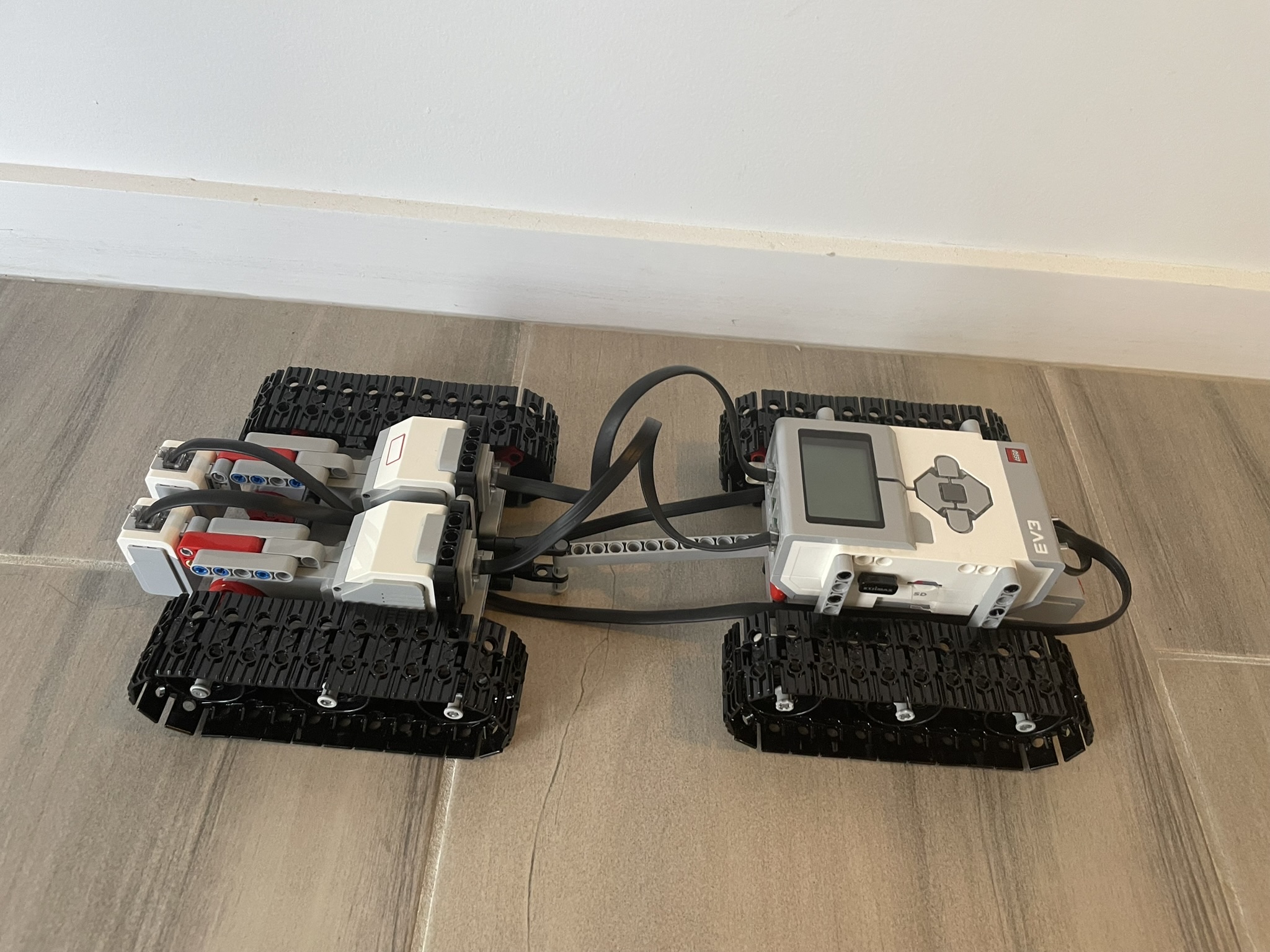
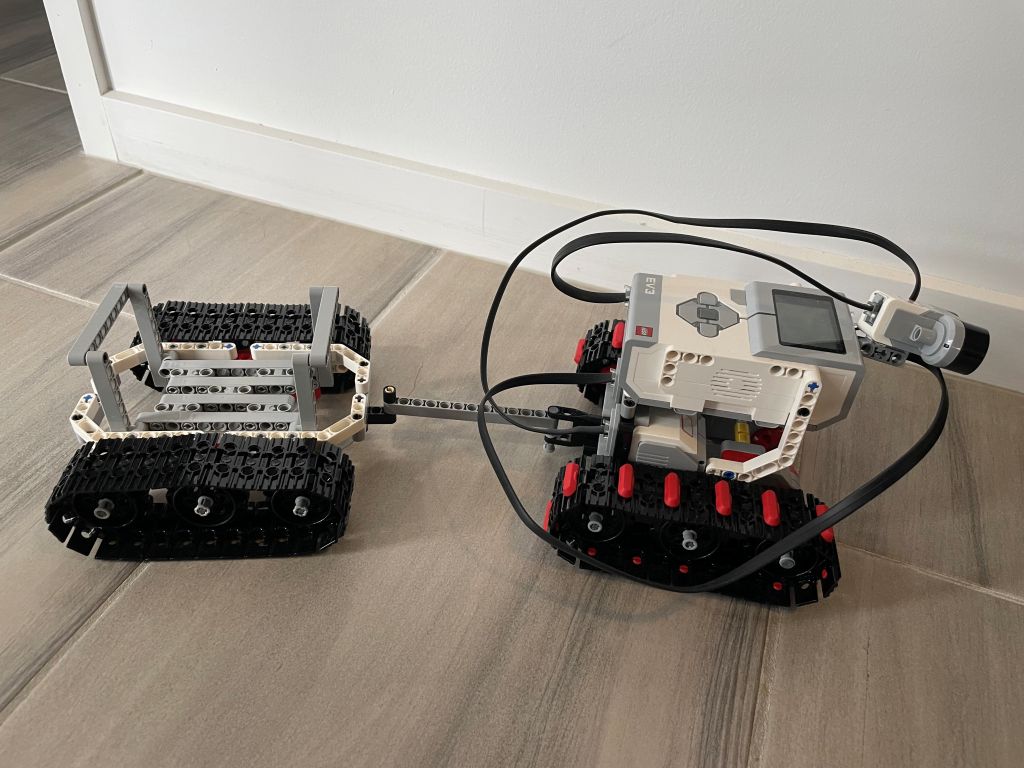
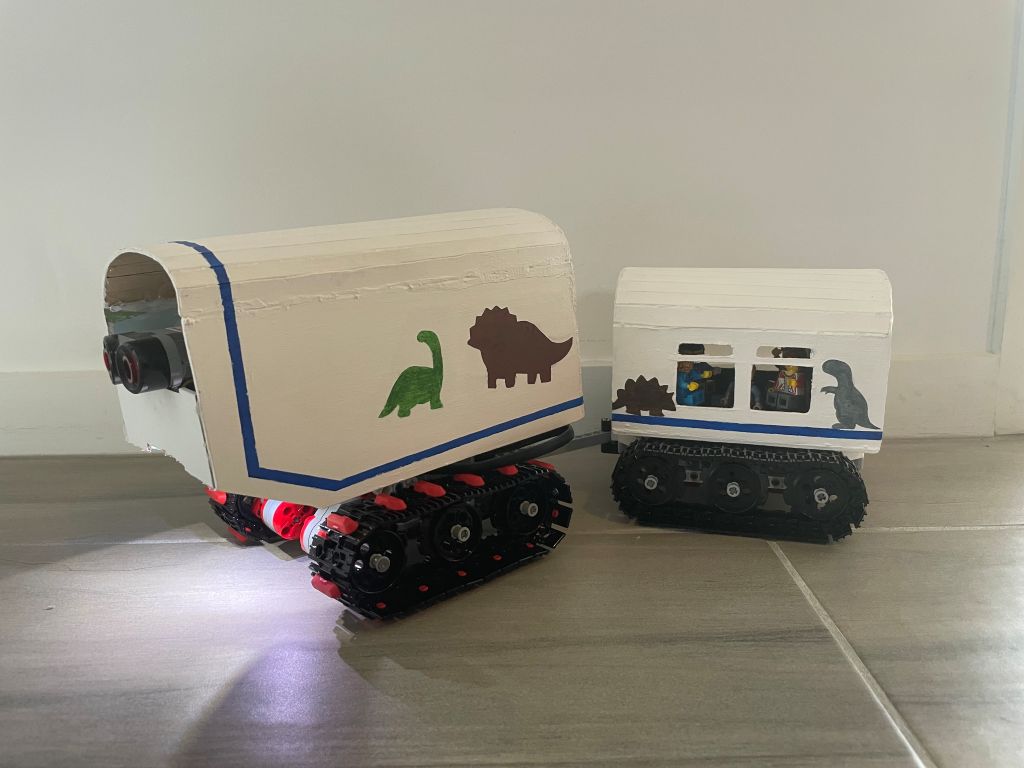
Thomas, the monorail (EV three)
The design of the Monorail is a 2-track tank type based on the LEGO
Tank Bot.
The robot is the other Jurassic Kingdom orchestrator (see
feature 4). It uses a video camera (PixyCam V2) for line following and barcode scanning (see
feature 3) and an ultrasonic sensor for object avoidance. Safety third?
The EV3Dev Python 3
code sends JSON messages, which are eventually reflected on the
Flask dashboards.
The robot follows the black middle line, like a rescue robot, but using a video camera instead of 2 colours sensors. It looks for barcodes and, when found triggers other robots as per JSON data stored in the
orchestration file. It also uses the ultrasonic sensor to detect and avoid other robots and props.
References ...
Glossary
1. Brick – EV3DEV Stretch OS (version 2020-04-10)
2. Edimax V2 Wi-Fi dongle (8188eu driver) and Sandisk 32 Gb SD card
3. Large motor (lego-ev3-l-motor class)
4. Small motor (lego-ev3-m-motor class)
5. Colour sensor (lego-ev3-color class)
6. Touch sensor (lego-ev3-touch class)
7. Ultrasonic sensor (lego-ev3-us class)
8. Mindsensors RFID reader (EV3Rfid ID‑12 / ID‑12LA chip)
9. Mindsensors IR temperature (non-contact) sensor (Melexis MLX90614 chip)
10. PixyCam V2 video camera (NXP LPC4330 chip)
11. Gyro sensor (lego-ev3-gyro class)
12. IR beacon (lego-ev3-ir class)
13. IR sensor (lego-ev3-ir class)
14. Mindsensors motor multiplexer (NXTMMX-v2 Atmel ATmega chip)